
The Supreme Court has allowed podcaster Ranveer Allahbadia to travel abroad after the Assam and Maharashtra governments said the investigation against him was complete. Allahbadia, known as BeerBiceps, was booked for his comments on parents and sex on comic Samay Raina's YouTube show "India's Got Latent".
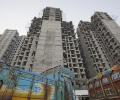
The Supreme Court of India has upheld an order directing NBCC to complete 16 delayed housing projects of Supertech Limited, providing relief to thousands of homebuyers who have been waiting for nearly two decades.
The Supreme Court of India has upheld an order directing NBCC to complete 16 delayed housing projects of Supertech Limited, providing relief to thousands of homebuyers who have been waiting for nearly two decades.

Podcaster Ranveer Allahbadia has filed an undertaking in the Supreme Court stating he will maintain decency in his shows. The undertaking was filed after the court allowed him to resume his podcast "The Ranveer Show" on March 3, subject to maintaining "morality and decency." Allahbadia, popularly known as BeerBiceps, was booked for his comments on parents and sex on comic Samay Raina's YouTube show "India's Got Latent." The Supreme Court previously called his comments "vulgar" and said he had a "dirty mind" which put society to shame.
The Supreme Court of India resolved a decades-old land dispute in the Union Territory of Dadra and Nagar Haveli, involving land originally vested in the Portuguese government.
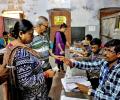
The Supreme Court has requested the Election Commission to respond to petitions challenging the Special Intensive Revision of electoral rolls in Tamil Nadu and West Bengal. The court has also asked the Madras and Calcutta High Courts to keep proceedings on similar petitions in abeyance.
The Supreme Court has scheduled hearings starting August 19 for the Presidential Reference concerning constitutional issues related to timelines for handling bills passed by state assemblies. The court has directed the Centre and states to submit written arguments by August 12.
The Supreme Court is scheduled to hear on March 18 a plea seeking to debar from polls, candidates charged with serious offences. The plea, filed by advocate Ashwini Kumar Upadhyay, seeks directions to the Centre and the Election Commission of India (ECI) to restrain such candidates put on trial for serious offences. The plea alleges that despite recommendations of the Law Commission of India and court's previous directions, the Centre and the ECI did not act. The plea also highlights the increasing number of MPs with declared serious criminal cases since 2009, with one MP declaring 204 criminal cases against him, including culpable homicide, house trespass, robbery, criminal intimidation, etc. It claims that political parties are competing with each other in a race to the bottom as they couldn't afford to leave their competitors free to recruit persons with criminal antecedents.
Commercial and prohibited speeches are not covered under fundamental rights, the Supreme Court on Monday said as it asked five social media influencers, including India's Got Latent host Samay Raina, to display their unconditional apology in their podcasts or shows for ridiculing persons with disabilities and rare genetic disorders.

Supreme Court Justice B V Nagarathna dissented against the collegium's recommendation to elevate Patna High Court Chief Justice Vipul Manubhai Pancholi to the Supreme Court, citing concerns about seniority, regional representation, and the circumstances of his earlier transfer.
The bench questioned the petitioner for not moving the high court and directly coming to the apex court.

The Supreme Court of India is set to determine whether Rohingya individuals in the country are to be considered refugees or illegal entrants, a crucial decision that will impact their rights and potential deportation.

The Supreme Court has directed the Bihar State Legal Service Authority to assist voters excluded from the final electoral rolls in filing appeals with the Election Commission.
The Supreme Court has directed the Election Commission to include Aadhaar as a valid document for voter identification in Bihar's special intensive revision of electoral rolls, clarifying it is not proof of citizenship.
The Supreme Court declined to entertain a plea seeking a special investigation team (SIT) probe into alleged electoral roll manipulation in Bengaluru Central and other constituencies, advising the petitioner to approach the Election Commission of India.
The Supreme Court of India has ruled that no timelines can be imposed on governors and the president to grant assent to bills passed by state assemblies, clarifying the extent of their powers under Article 200 of the Constitution.
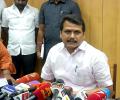
The Supreme Court has criticized the Tamil Nadu government for implicating over 2000 individuals in the cash-for-jobs scam involving former minister V Senthil Balaji, demanding details of all accused and witnesses.

The Supreme Court of India has directed the NHAI and MCD to consider relocating or temporarily closing toll plazas at Delhi's borders to alleviate traffic congestion and reduce air pollution. The court also addressed school closures and financial aid for construction workers affected by pollution control measures.

The Supreme Court on Thursday refused to examine a public interest litigation (PIL) seeking a judicial probe into the April 22 Pahalgam terror attack in which 26 people were killed.

The Supreme Court on Friday sought response of Maharashtra and Assam governments on a plea of YouTuber Ashish Chanchlani seeking to quash or transfer to Mumbai a first information report (FIR) registered in Guwahati in connection with a case of allegedly promoting obscenity in an online show.
The Supreme Court is reviewing objections to the movie 'Udaipur Files - Kanhaiya Lal Tailor Murder,' with the Centre suggesting six cuts. The court has extended a stay on the film's release until further orders.
The Supreme Court on Monday pulled up Madhya Pradesh minister Kunwar Vijay Shah for not issuing a public apology over his remarks against Indian Army officer Colonel Sofiya Qureshi, saying he is testing the court's patience.
The bench, which asked Jain to withdraw the plea filed against a Delhi high court order that dismissed a writ petition challenging the registration and recognition of the AIMIM by the Election Commission (EC), granted liberty to the petitioner to file a writ petition, wherein he may make a wider prayer for reforms in respect of political parties on different counts.
The Supreme Court of India expressed concerns about the long-term sustainability of providing free rations to migrant workers, emphasizing the need for job creation and capacity building instead. The court's remarks came during a hearing on the ongoing issue of providing relief to migrant workers, a matter that gained prominence during the COVID-19 pandemic. The court questioned the government's reliance on freebies and stressed the importance of creating opportunities for migrant workers to become self-sufficient. The debate highlighted the challenges of balancing immediate relief with long-term economic solutions for vulnerable populations.
Ashoka University professor Ali Khan Mahmudabad, previously booked for social media posts, has petitioned the Supreme Court for the release of his passport, a condition of his bail. The court will consider the plea on November 18.
The Supreme Court has directed the Maharashtra government and its state election commission to conduct local body elections, clarifying that the results will be subject to the court's final verdict, especially concerning the 50% quota limit. The court will hear pleas regarding OBC reservation in local bodies in January 2026.

The Supreme Court will also hear similar pleas related to permanent commission from the Indian Navy, followed by the Indian Air Force and Coast Guard.

The Supreme Court on Thursday held that the Governor can reserve a bill for consideration of the President even in the second instance, when the bill is again sent by the state assembly to him whether in its amended or unamended form.

The Supreme Court on Thursday refused to accept the preliminary objections raised by opposition-ruled states like Tamil Nadu, West Bengal and Kerala to maintainability of Presidential Reference, saying the issues raised in it pertain to the very core and foundational modalities of the constitutional machinery.

The Supreme Court of India has announced its intention to establish an effective mechanism to address caste-based discrimination in educational institutions throughout the country. The court directed the University Grants Commission (UGC) to draft regulations to prevent such discrimination and to provide data on institutions that have implemented equal opportunity cells as mandated by the 2012 UGC equity regulations. The court's decision stems from a public interest litigation filed in 2019 highlighting the prevalence of caste-based discrimination in higher education institutions and its tragic consequences, including the suicides of students like Rohith Vemula and Payal Tadvi.

The Centre has argued before the Supreme Court that state governments cannot use writ jurisdiction to challenge the actions of the President and Governor regarding bills passed by state assemblies, particularly concerning fundamental rights violations. The President seeks the Supreme Court's opinion on whether states can file writ petitions under Article 32 and the scope of Article 361.
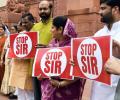
The Supreme Court has warned that it will set aside the special intensive revision (SIR) of electoral rolls in Bihar if any illegality is found. The court is reviewing the validity of the Bihar SIR and its potential impact on a similar exercise across India.

The Supreme Court of India has reprimanded the Tamil Nadu Pollution Control Board (TNPCB) for delaying legal action against Isha Foundation, a yoga and meditation center founded by Sadhguru Jaggi Vasudev, over alleged environmental violations. The court criticized the TNPCB for taking two years to challenge a Madras High Court ruling that quashed a showcause notice against the foundation. The court also emphasized the importance of environmental compliance for the yoga center, noting that it must meet all necessary parameters. The case highlights ongoing legal challenges and environmental concerns related to the Isha Foundation's activities.
The Centre informed the Supreme Court that a panel led by Prime Minister Narendra Modi is likely to meet on December 10 to select and recommend names for the post of Chief Information Commissioner and information commissioners of the Central Information Commission (CIC).

The Supreme Court has directed the Indian Air Force not to release Wing Commander Nikita Pandey from service. Pandey, who participated in Operation Balakot and Operation Sindoor, was denied a permanent commission despite being an expert fighter controller. The court raised concerns about the uncertainty faced by Short Service Commission (SSC) officers who are denied permanent commissions after years of service. The court emphasized the need for a system to accommodate all suitable SSC officers in permanent commissions, highlighting the excellent performance of women officers. The court has ordered the IAF to consider Pandey's case in a second selection board and has postponed the hearing to August 6.

The Supreme Court has questioned the 'arbitrariness' in the consideration of 'criteria appointment' for Short Service Commission (SSC) women Army officers seeking permanent commission, compared to their male counterparts. The court is hearing a plea from women officers challenging the denial of permanent commission.
A Constitution bench comprising Chief Justice B R Gavai and Justices Surya Kant, Vikram Nath, P S Narasimha and A S Chandurkar, would fix the timelines on July 29 and commence hearing on the presidential reference in mid-August.
The Supreme Court of India has sought the government's response on a Public Interest Litigation (PIL) that challenges the appointment process of the Comptroller and Auditor General of India (CAG), arguing it's unconstitutional. The PIL, filed by the Centre for Public Interest Litigation, claims the current process, solely through executive appointment by the Prime Minister, undermines the CAG's independence and violates constitutional principles. The court, while acknowledging the importance of institutional trust, questioned the extent to which it should intervene in the appointment process and whether this would constitute rewriting constitutional provisions. The PIL suggests the CAG's appointment should be similar to other independent bodies, with a selection committee comprising the Prime Minister, Leader of the Opposition, and Chief Justice of India. The case has implications for the independence and transparency of India's audit system.

A bench of Justices Surya Kant and N Kotiswar Singh was acting on a batch of pleas against the blanket ban on blood donations by such persons from the LGBTQIA+ community.
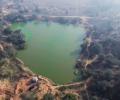
The Supreme Court has kept in abeyance its previous verdict on the definition of the Aravalli hills and ranges and proposed a high-powered committee to examine the issue.
